
Amy Ryan Spotlight
How did you first become involved in CF research?
My first postdoctoral position at the University of California, San Diego focused on the regulation of ion channels. While I was not directly involved in CF research at that time, my colleagues were patch clamping and studying CFTR activity. It was not until my second postdoctoral position in the Verma Lab at the Salk Institute that I became directly involved in the field. My research there focused on combining the emerging technologies of iPSCs and gene editing (back then, Zinc Fingers!) to correct cells from patients with monogenic diseases. It just so happened that donor tissue from a person with CF was the first sample I received, and I managed to persuade my PI that this was the project I wanted to focus on. Through John Engelhardt, I was introduced to the Cystic Fibrosis Foundation, and I have been working toward the goal of developing cell and gene therapies for CF ever since. Today, about 50% of my lab's research is focused on CF.
How would you describe your research to a general audience?
My research program focuses on developing new approaches to treat rare lung diseases, including CF. We use cells and tissues donated by people with CF and other lung diseases to create laboratory-grown models that closely mimic the human airway. These models allow us to study how disease develops and progresses in human cells and provide a powerful platform for testing new therapies. A major focus of my lab is combining stem cell technology with advanced gene-editing approaches to investigate ways to correct disease-causing mutations and evaluate potential treatments before they reach patients. We are particularly interested in understanding why the lung loses its ability to repair and regenerate itself during disease. By studying airway stem cells and the factors that cause them to lose their regenerative capacity, our goal is to develop therapies that restore the lung's natural ability to heal. More recently, we have expanded this work beyond the lung to better understand how the exocrine pancreas develops and functions, and how defects in these processes contribute to cystic fibrosis-related diabetes (CFRD). Using stem cell-derived models of pancreatic development, we are investigating the interactions between different cell types in the pancreas and how CFTR dysfunction alters these relationships over time. We hope this work will provide new insights into why CFRD develops and identify opportunities for earlier intervention and improved treatments. Ultimately, by creating more accurate human disease models and exploring innovative regenerative, cell, and gene-based therapies, we aim to bring more effective and personalized treatments closer to reality for people living with CF and other rare diseases.
Why does this work matter to you professionally or personally?
I have always centered my research program around addressing fundamental biological questions that have significant translational potential and can ultimately make a difference in the lives of people with lung disease, particularly those with rarer conditions where symptomatic management remains the primary standard of care. For this reason, much of my research has focused on developing better tools and models to understand human lung disease. We predominantly use human tissues, cells, and disease models to maximize the translational relevance of our findings. Ultimately, it is the patients who drive and motivate me. Lung disease can be incredibly debilitating and have a profound impact on quality of life. CF patients are among the most resilient people I have met. They are often remarkably knowledgeable about research, deeply engaged in scientific progress, and genuinely interested in advancing new therapies. Their determination and optimism are a constant source of inspiration and reinforce the importance of the work we do.
What is one project, collaboration, or finding you are especially excited about right now?
One project I’m particularly excited about is our work to better understand CFRD. Through support from the PMCCF, we have established a new collaboration with Dr. Ling Yang, whose research has identified a long non-coding RNA that produces a previously unrecognized peptide that may play an important role in insulin production. Early findings suggest that this peptide may be secreted at lower levels in people with CF, potentially contributing to the development of CFRD. We currently have a collaborative study under review that will allow us to further investigate the function of this peptide using our stem cell-based models. The opportunity to combine complementary expertise and technologies through this collaboration makes it an exciting project for our team.
How does the PMCCF support or connect to your work?
As Director of the PMCCF, I have the opportunity to be involved, either directly or indirectly, in many CF research projects across the University of Iowa. One of the most rewarding aspects of this role is helping to bring investigators together, foster new collaborations, and connecting researchers with the resources and expertise needed to move their work forward. The PMCCF provides critical support through pilot funding, core facilities, mentorship, and opportunities for collaboration. A major goal moving forward it to create connections between basic scientists and clinicians, ensuring that discoveries made in the laboratory remain focused on addressing the needs of people with CF. For my own research, the PMCCF has been instrumental in establishing new collaborations that have expanded the scope and impact of our work, particularly in emerging areas such as CFRD. More broadly, it allows me to engage with a large community of investigators at Iowa who share a common goal of improving the lives of people with CF. Being part of that collaborative environment is both professionally rewarding and essential for driving scientific discovery.
Relevant Publication
While this publication is from my postdoc it was the one that started my journey into CF research
What is one thing people may be surprised to learn about you?
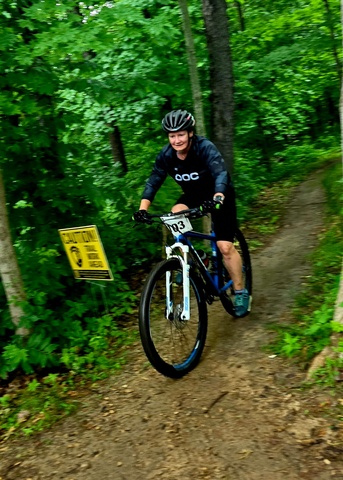
I’m British, not Australian! I grew up on a farm in the UK and now live on a small hobby farm just outside Cedar Rapids, where we have goats, a pig, and about 20 chickens. When I moved from the UK to San Diego, I decided to take up triathlon and eventually raced everything from sprint-distance events to a couple of Ironman triathlons. I’ve always enjoyed setting ambitious goals and finding new challenges, whether running, cycling, or trying something completely different. These days, our family is involved in BMX racing. Both of my kids race, and I even race alongside them. In fact, I’m currently the Iowa State BMX Champion for my age group, although I should admit there aren’t exactly a lot of women my age competing!
Favorite way to unwind after a long day?
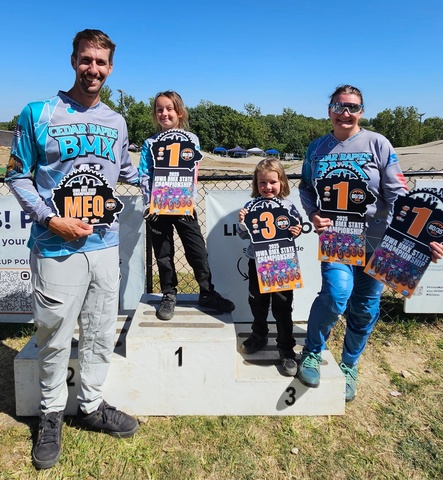
With two kids (Maddi 8 and Savannah 5), there is very little time to unwind! My husband, Dan, is a track operator and president of a nonprofit organization that runs the Cedar Rapids BMX track. Both of our kids race BMX, so we spend much of our spare time during the spring and summer at the track. I volunteer as needed, whether that's announcing races or helping with staging. Any free time I do get is usually spent biking or running to clear my head. Since moving to Iowa five years ago, I've really enjoyed getting out on the gravel roads and exploring by bike. While I would love to say that I unwind with a good book, the reality is that I usually make it through about one page before falling asleep!